

There are numerous challenges in the travel industry today: rising costs, travellers wanting vastly different experiences, AI… Travel brands are having to make smarter choices to adapt to travellers changing needs, remain human at the heart of increasingly automated journeys, and show up in the places travellers are searching.
To help travel providers better understand what’s driving traveller choices and behaviours and what they need do to adapt to stay relevant, Havas agencies Gate One, Conran Design Group, Havas Market and Inviqa came together to explore what makes a brand meaningful, an experience exceptional, and how they can remain visible in the era of AI.
They were joined by leaders from within the travel ecosystem who shared real-life stories of how they’re adapting and thriving in this rapidly shifting landscape.
What they revealed was that:
Customers are becoming more apathetic, but there are opportunities to combat that by delivering meaningful, human-centred, and more personalised experiences
Exceptional experiences, as key differentiators, are anchored in authenticity and scaling requires careful consideration of what should stay the same and what should flex to fit to local context
AI is reshaping search and decision making and continued visibility will depend on being part of the AI conversation with rich content, clear signals and a strong presence across platforms that feed into AI models as well as search engines
Trust and loyalty are built through relevance and credibility, understanding who your customers are and shaping products, content and experiences around their needs and expectations
It was a rich session, difficult to reduce into just a few soundbites, so for a more detailed review of what was discussed, keep reading…
Consumer apathy is reshaping the travel market
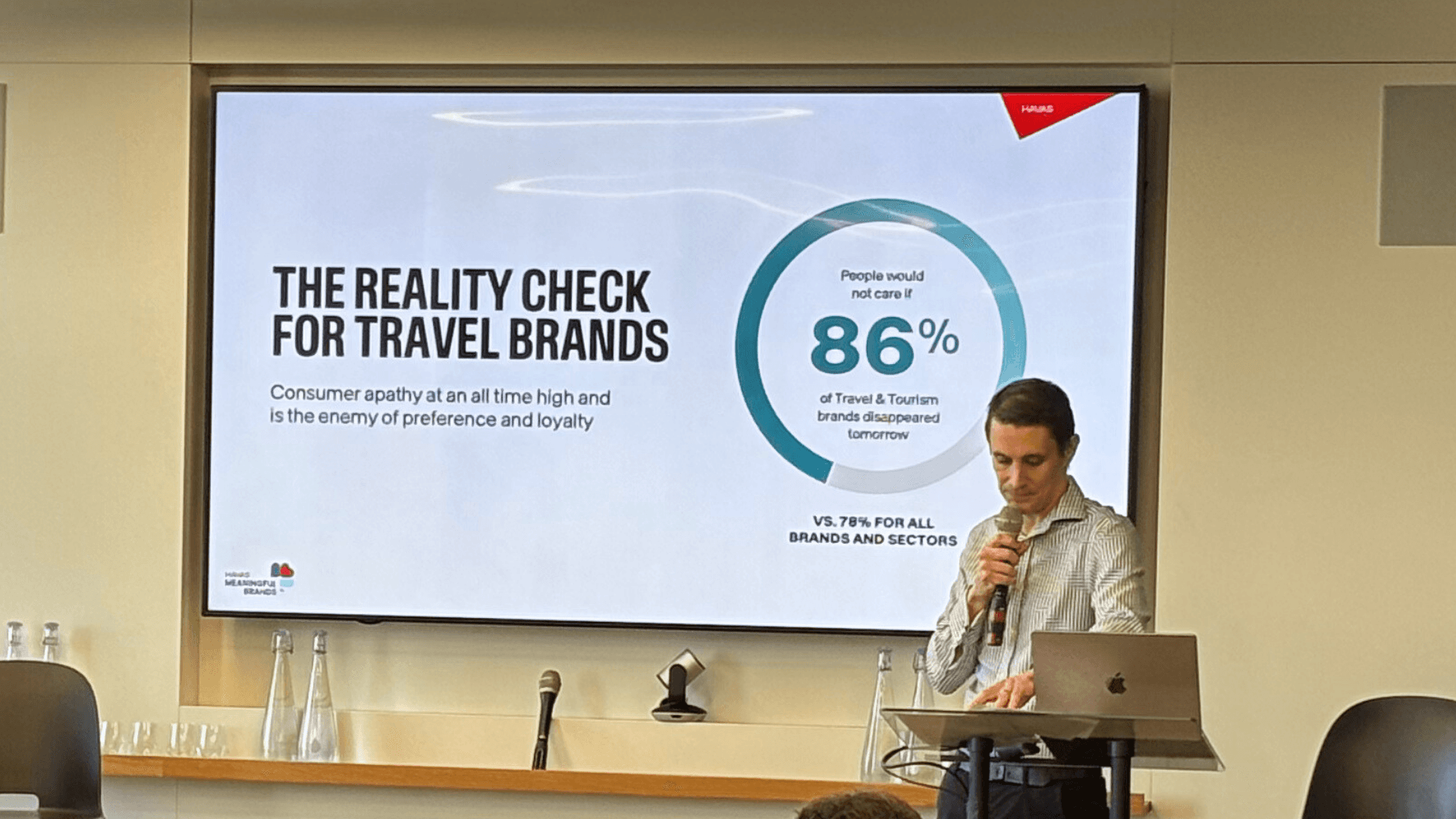
James Cooper, Partner at Gate One, began with a reality check from the Meaningful Brands study: people wouldn’t bat an eyelid if 86% of travel and tourism brands disappeared tomorrow.
This is due to a significant shift in consumer mindsets, priorities and expectations. Consumers are more vocal, driven and expectant of brands. They’re also less forgiving, lenient and loyal.
And there are stats to back this up. 68% of customers will switch brands if they find a more cost-effective or convenient option, and 41% have said if they have a negative experience with a brand, they’re quick to share it in a review.
To overcome this apathy, James highlighted three areas that matter most to consumers, and that travel brands need to focus on:
Personal benefit: people want to be recognised as humans rather than data points, with messaging and behaviour tailored to their individual needs
Functional benefit: these are the rational parts of the experience that prove the cost is worth it
Collective benefit: people want brands to act responsibly and contribute positively to society and the planet
Leading organisations are showing how you can adapt
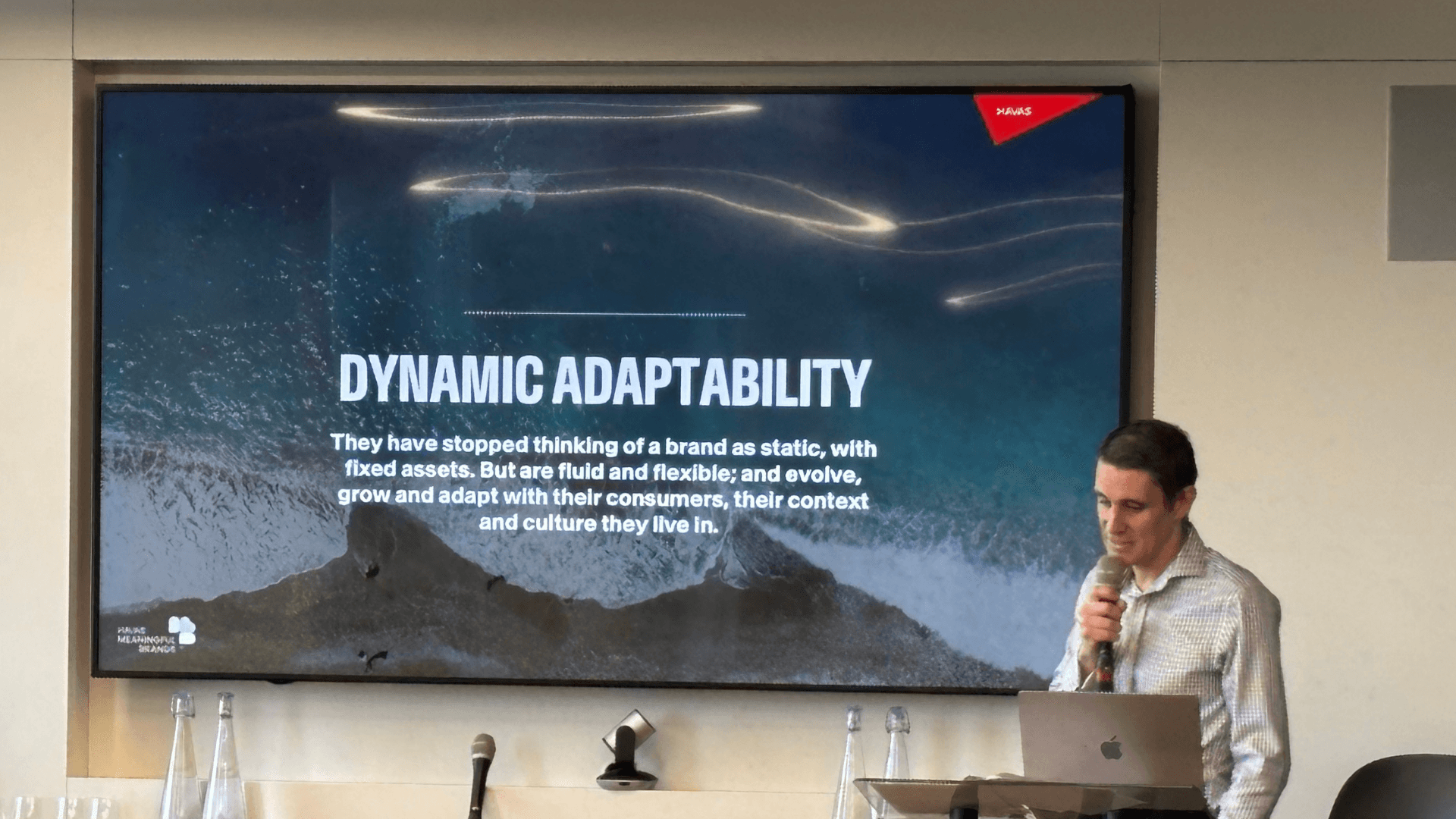
The brands navigating these effectively display what James calls ‘Dynamic Adaptability’. They keep close to cultural and customer shifts, embrace technological change, rethink structures and design meaningful customer-centred experiences.
But while adaptability is going to be the new organisational superpower, transformation isn’t always easy. Research done by Havas, and published in the Transformation Index, shows that transformation projects often fail, not because of a bad strategy, but because organisations lack the structural adaptability to respond to change or lack the critical skills.
The organisations that are seeing success with transformation projects do this by:
Champion data and using it to inform decisions
Focusing on what matters and stopping work that is not mission-critical
Setting a clear vision and aligning programmes and teams behind it
But, James shared, only 22% of respondents to the research place the customer experience within their transformation programmes.
With customer apathy on the rise, this is a dangerous oversight. Transformation should always be delivered with the customer front of mind, and experience is the antidote to apathy.
Customer experience is the antidote to apathy
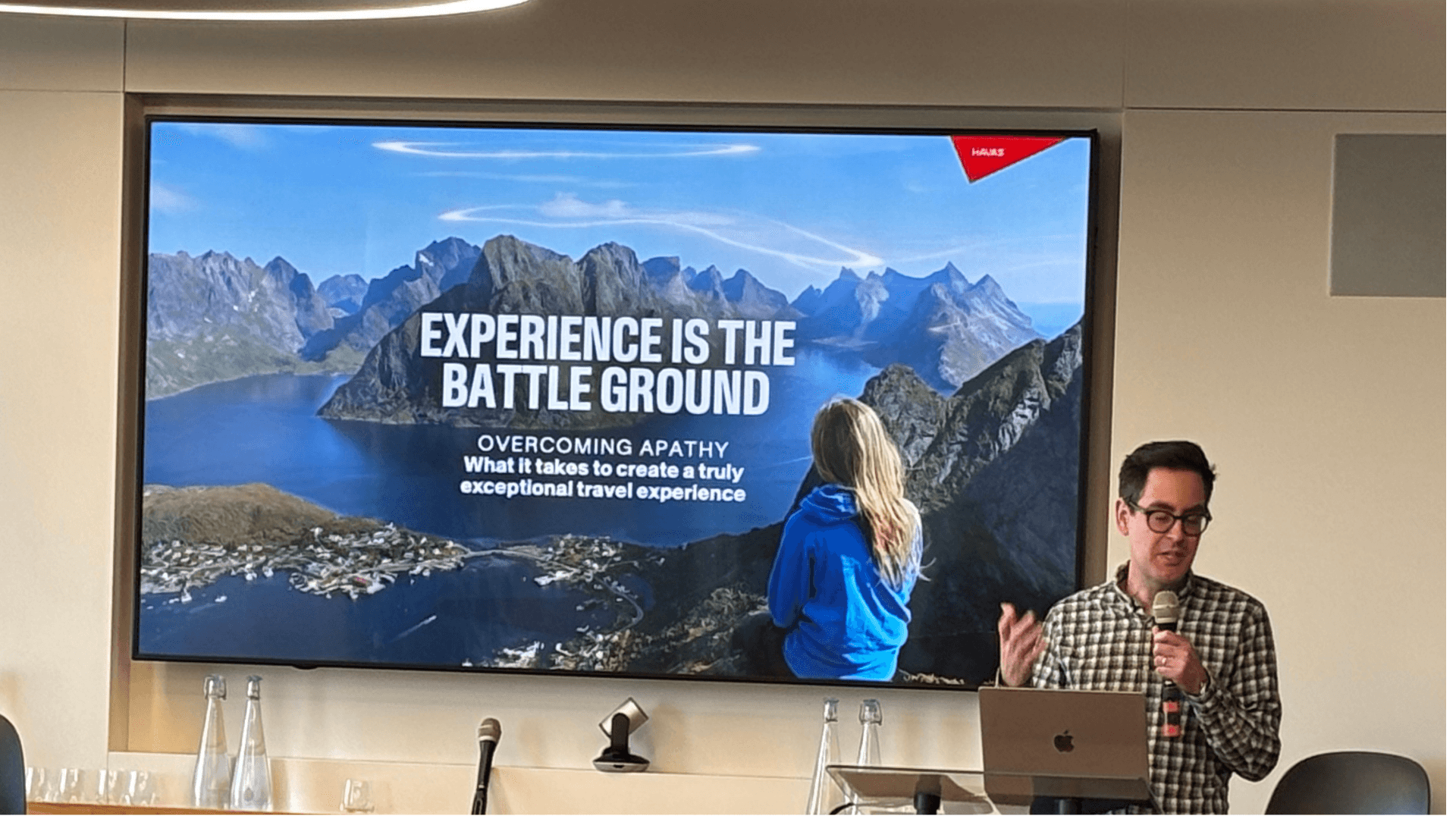
Tim Parker, Brand Strategy Director at Conran Design, picked up the thread, exploring what makes an experience exceptional and how brands can shape and scale those experiences.
According to Tim, there are two essential elements to an exceptional experience:
A sense of authentic connection, being an active and genuine participant rather than a passive observer
An element of surprise. Something that creates a spike of emotion and a heightened sense of being in the moment.
Creating exceptional experiences requires the fusing of the brand and the human. The brand shapes how your organisation impacts every part of the experience, while the human element comes in at the most critical person-to-person moments.
To then scale that experience effectively, relies on retaining authenticity. Tim shares that there are two sides to authenticity: authenticity to your brand and authenticity to your audience. Scaling an experience effectively therefore doesn’t mean simply replicating an experience at every location but rather tweaking it so it’s authentic both to the brand and the context it’s in.
Sofitel’s croissant is a prime example. The croissant is a fixed brand symbol, an embodiment of Sofitel’s aim to bring the French joie de vivre to life, but it is infused with local flavours so it’s a little different depending on where you are. This helps make the experience authentic to the brand, but also the location in which it’s experienced.
Tim’s conclusion was simple. Exceptional experiences don’t rely on being bigger or more lavish but rather on being more meaningful, more authentic and more distinctive.
How travel brands are adapting in real time: Panel discussion
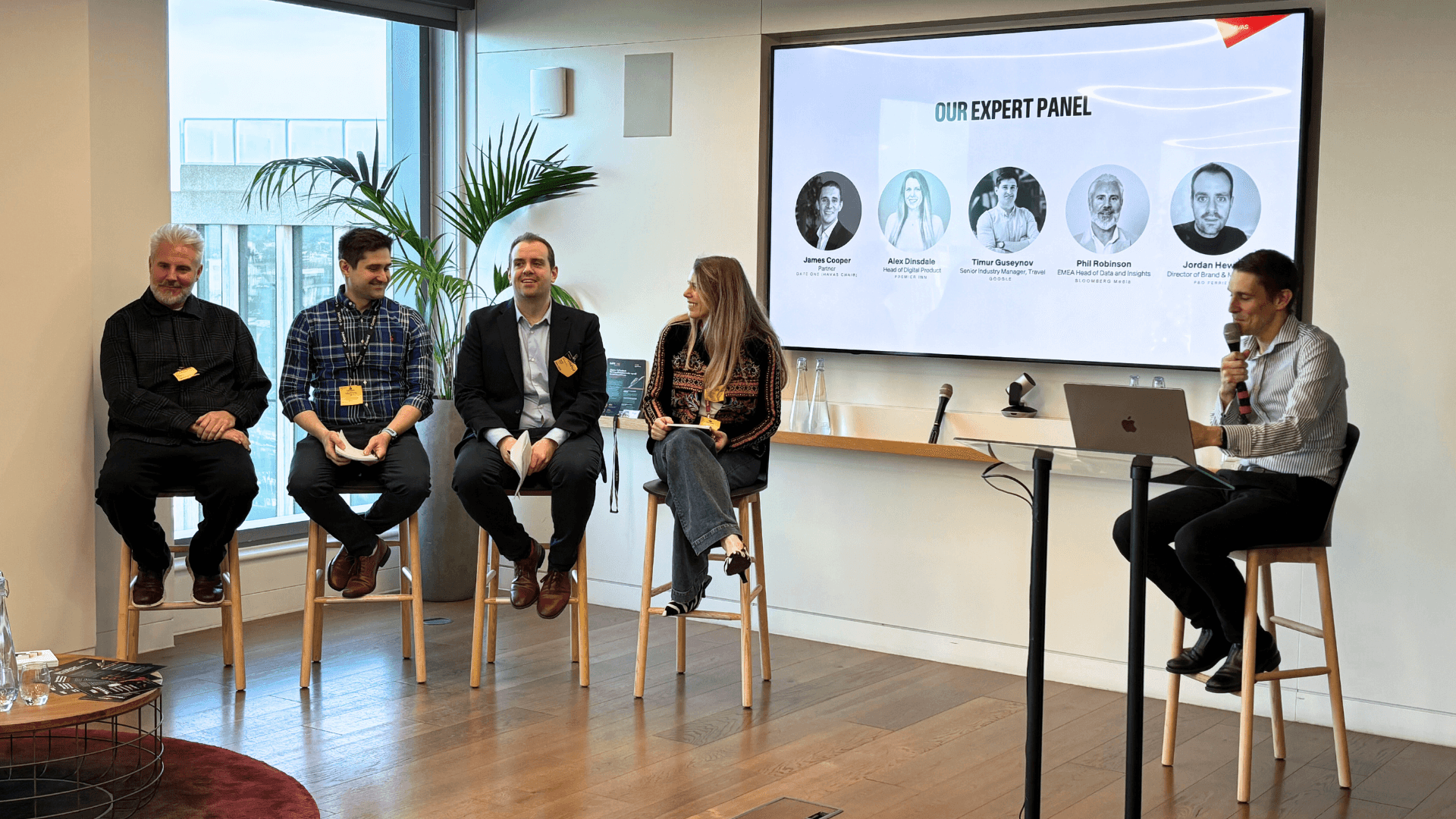
The panel of travel leaders then explored how they are staying competitive as expectations rise, technology accelerates, and the industry faces constant volatility.
1. Trust returns when brands become genuinely relevant again
Jordan Hewitt, P&O Ferries’ Director of Brand and Marketing, explained that rebuilding trust started with a clear understanding of who their priority audiences were and reshaping the product around what they value. For P&O Ferries this meant focusing on families and offering them something airlines couldn’t. Once this relevance was established, confidence and consideration have followed.
And this approach extends into marketing. Channel siloes have been broken down so teams understand how content moves through the ecosystem. The company also learned powerful lessons about channel expectations. Their AI-generated Christmas ad performed well on YouTube and Facebook, but received strong backlash on TikTok, where creator culture makes AI content unwelcome. The team now treat channel context as a core strategic input.
2. Transformation succeeds when everyone is aligned around a shared purpose
Alex Dinsdale, Whitbread’s Head of Digital Product, explained that Whitbread’s progress comes from having a clear plan and a unified understanding of what the organisation is working towards. For them, transformation means scale and consistency, and any change has to work end-to-end. A focus on the customer experience highlights what needs to be done to deliver the desired experience, and clarity of the what and the why keeps teams aligned to make change sustainable.
She went on to say that Premier Inn’s strongest loyalty driver is its reliability. Guests return because they know exactly what they will get. While Whitbread is exploring loyalty mechanics carefully, the core of their focus is on strengthening direct channels, improving the app and using functional innovations to improve the experience and build convenience-led loyalty.
3. Data drives authenticity and agility
Phil Robinson, Bloomberg Media’s Head of Data Science & Insights EMEA, shared how behavioural insight helps brands build trust with high-value travellers. When working with Saudi Tourism, Bloomberg identified that this audience highly valued art, architecture, gastronomy and female empowerment. By letting Saudi women tell those stories in their own voice, the content became more credible and resonant.
Phil also highlighted how real-time financial signals, such as currency shifts, link directly to travel behaviour. Bloomberg has built technology to identify key live moments in news and allow brands to align with those signals in real time.
4. AI is reshaping discovery, but traditional search still matters
Timur Guysenov, Google’s Senior Industry Manager, Travel, noted that while early research increasingly happens in LLMs, almost all travellers still return to traditional search when ready to book. Brands, therefore, need to evolve into agentic first for visibility by providing rich, detailed answers for AI discovery while also ensuring they continue to be positioned in traditional search.
And Timur warned the audience against waiting for ‘perfect’ conditions. The agentic commerce capabilities emerging in other sectors will reach travel soon. Early adopters will learn the fastest and benefit the most.
How AI platforms are changing the search visibility
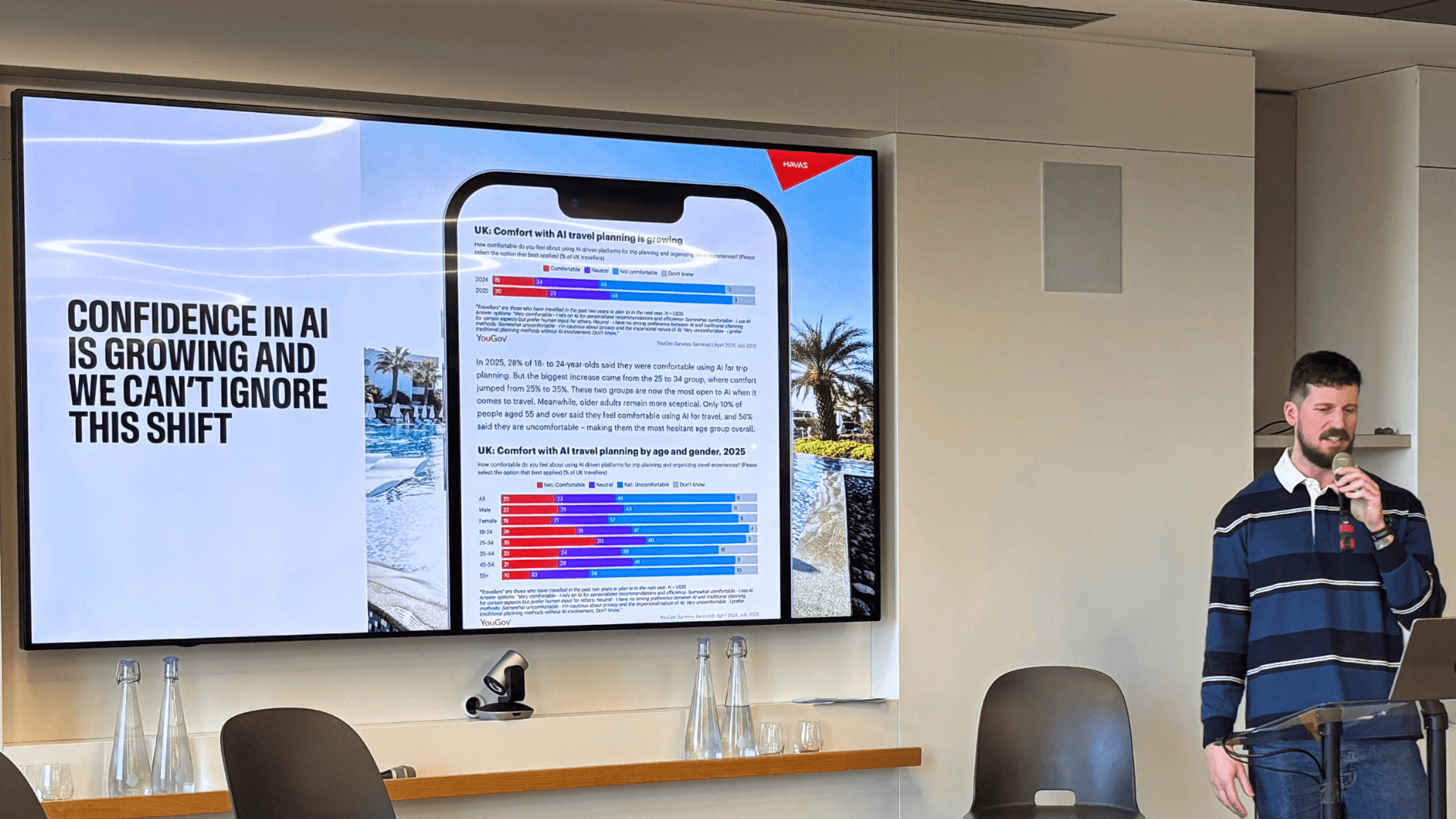
James Bentham, Havas Market’s Head of SEO, echoed Timur’s sentiments, and shared a few stats to back it up: queries that once involved multiple searches, website visits, and comparisons now happen within a single agentic interface, reducing organic traffic by 15% to 64%, depending on the query.
It’s not all doom and gloom, however. Visitors who arrive from AI recommendations tend to be 4.4x more valuable, arriving later in the decision-making journey and are therefore more likely to purchase.
As the agentic features already available in the US show, people may not visit a brand’s site at all. So, to remain visible, brands must optimise site content for AI comprehension and strengthen their presence across external platforms like Reddit, Pinterest and YouTube that feed into AI models.
To support brands in their quest for AI visibility, Havas Market has developed Brand Insights AI. This tool provides a complete view of how a brand appears across major AI search models, performance by topic, and against competitors, helping you build a clear roadmap to strengthen AI visibility. Learn more here.
Agentic commerce is coming for Travel
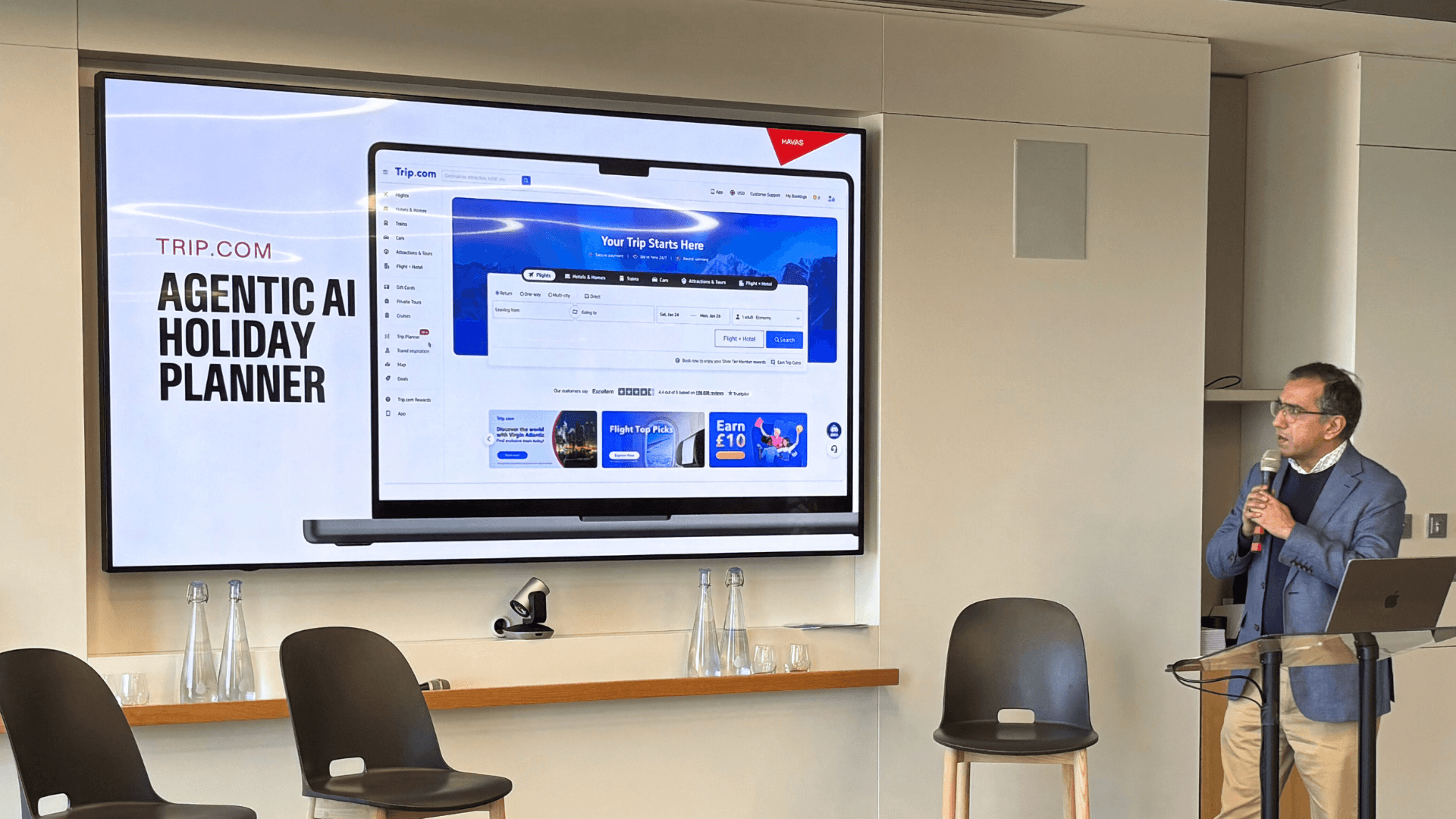
Last, but by no means least, Inviqa’s CTO, Kaustav Bhattacharya, shared what this new AI-powered world looks like in practice.
Virgin Atlantic’s concierge service brings the airline’s tone of voice into a conversational planner. Trip.com’s agentic capabilities allow travellers to build full itineraries with maps and reviews in a single session. Booking.com’s integration into ChatGPT shows how multiple agents can collaborate to deliver personalised itineraries without leaving the interface.
Each of these models allow travellers to plan and book multi-day trips, with full itineraries, in a single conversation, and can even complete booking tasks all within that one ecosystem.
And there’s a clear benefit to owning these AI experiences: It unlocks deep first-party insights from natural conversation which travel brands can then use to continue to improve the overall traveller experience.
Travel brands looking to build their own agentic experiences must keep three things top of mind:
The conversational design needs to reflect the brand voice
Your standard operating procedures need to be documented and accurate, so you can feed these to your AI to create authentic, accurate experiences, and
You need robust AI guardrails to protect your agentic solutions from hallucinating and leading customers down the wrong path
The path forward for travel brands
While each speaker spoke on a different element of how consumer behaviour and expectation was impacting travel, there were clear themes throughout the morning.
People are more demanding and are less forgiving
Differentiation through experience matters more than ever
Authenticity is non-negotiable
AI is reshaping discovery, visibility and booking at speed
Travel brands that accept this reality and act early will be best placed to thrive. By anchoring transformation in customer needs, designing experiences that feel meaningful and true to context, and preparing now for AI-enabled journeys, travel brands will be able to adapt rather than disappear.
Kaustav Bhattacharya, Inviqa CTO, and Alex Blaney, Inviqa’s Chief Creative Officer, explore how AI can help enhance each of the 5 stages of the travel journey in our latest webinar recap.