Why digital transformations are still missing the mark - insights from CX Exchange UK.
Global spending on digital transformation is projected to reach an astonishing $3.9 trillion by 2027. Yet, according to Harvard Business Review, 87.5% of these initiatives fail. This paradox raises a critical question: why are organisations investing so heavily in digital experiences while struggling to deliver meaningful outcomes?
The answer lies not in a lack of ambition or data but in a persistent disconnect between insight and action. Organisations today are awash with analytics, dashboards, and customer feedback loops. However, useful understanding often stalls between discovery and delivery-blocked by structural silos, competing priorities, and a fixation on ‘shiny new things’ rather than fixing fundamentals.
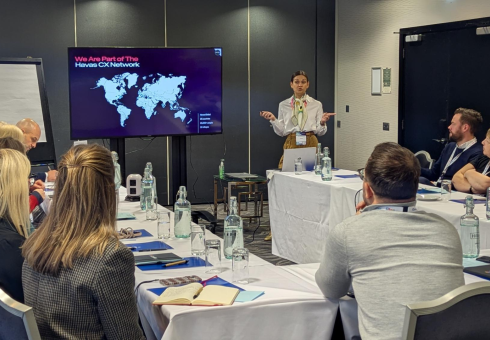
When Rachael Brandon-Lai brought this topic to our CX Exchange Think Tank, here’s what she uncovered.
Leadership buy-in is the missing link
One recurring theme from the think tank was the role of leadership. Senior decision-makers often remain too far removed from real customer pain points. Investment decisions are driven by assumptions rather than facts, leading to programmes that look good on paper but fail to move the needle.
A general business principle still dominates: 80% of investment goes to revenue and profit, 10% to customer experience, and 10% to innovation. This imbalance derisks short-term gains but stifles transformative change.
The qualitative vs. quantitative debate
Another insight was the growing tension between qualitative and quantitative research. Quantitative data is cheaper, faster, and scalable, but it rarely reveals the ‘why’ behind customer behaviour. Qualitative research, though more expensive, uncovers deeper motivations and unmet needs.
A leading UK supermarket brand shared an example: a simple reminder about expiring credit cards improved checkout completion and saved millions in lost orders-an insight that would never surface from big data alone. Organisations that blend qualitative and quantitative approaches are better positioned to prioritise effectively and avoid costly missteps.
Fix fundamentals over chasing trends
The appetite for innovation often prioritises new features over addressing core issues.
An attendee from a travel brand highlighted how ‘shiny new things’ can overshadow real customer problems-even when data clearly signals what needs fixing. Similarly, an energy supplier noted that customers only engage when something breaks, making proactive engagement difficult. Yet, with smart meters and connected devices, they can predict and prevent issues before they escalate-a shift from reactive fixes to proactive care, akin to managing health rather than illness.
Customer expectations: speed isn’t always king
One attendee, from a popular health-care brand, offered a counterintuitive example: their robotic warehouse was so efficient that orders processed instantly left customers no time to review or amend purchases.
By deliberately delaying processing by 30 minutes, they reduced call centre costs and improved satisfaction. This illustrates a broader truth: faster isn’t always better.
Understanding the nuances of customer experience-where convenience meets control-requires more than metrics; it demands empathy.
The overlooked 55+ demographic
Our discussion also surfaced a blind spot: the 55+ audience.
Wealthy and digitally active, this demographic is often underrepresented in research. While 70% of a travel company’s 50+ customers preferred online booking, their digital capabilities varied widely compared to younger cohorts.
Designing inclusive experiences means recognising this diversity and avoiding one-size-fits-all assumptions.
Turning insight into action
So, how do we bridge the gap between knowing and doing? It starts with reframing priorities:
- Ask what’s missing, not just what’s new
- Bring leadership closer to the customer
- Blend qual and quant
- Focus on fundamentals
Digital transformation isn’t failing because of insufficient investment or technology. It’s failing because organisations struggle to convert insight into action. The winners will be those who combine evidence with empathy, strategy with storytelling, and ambition with pragmatism.
Want more?
Join us on Thursday, 22nd January (11:00–12:00 GMT) for our webinar ‘Designing for Impact: Turning Insight into Action’, led by Rachael Brandon-Lai, Executive Director of Strategy, and Kaustav Bhattachary, CTO, at Inviqa.
They'll share practical methodologies to prioritise effectively, influence leadership, and turn insights into measurable outcomes. Register today to secure your spot.